14 Ways to Achieve Top Google Rankings in 30 Days
|
 Brought to you by Web Video Launch 2.0 Brought to you by Web Video Launch 2.0
Frank Pournelle.msba
|
 1. Search Engine Optimization:
Site Map, Anchor Links, BackLinks, Meta Tags, Keywords
Search engine optimization (SEO) is the process of improving the volume and quality of traffic to a web site from search engines via "natural" ("organic" or "algorithmic") search results. Usually, the earlier a site is presented in the search results, or the higher it "ranks," the more searchers will visit that site. SEO can also target different kinds of search, including image search, local search, and industry-specific vertical search engines. We target the natural or free side of search.
As an Internet marketing strategy, SEO considers how search engines work and what people search for. Optimizing a website primarily involves editing the site’s content and HTML coding to increase its relevance to specific keywords and to remove barriers to the indexing activities of search engines.
The acronym "SEO" can also refer to "search engine optimizers," a term adopted by an industry of consultants who carry out optimization projects on behalf of clients, and by employees who perform SEO services in-house. Search engine optimizers may offer SEO as a stand-alone service or as a part of a broader marketing campaign. Because effective SEO may require changes to the HTML source code of a site, SEO tactics should be incorporated into web site development and design.
The term "search engine friendly" is used to describe web site designs, menus, shopping carts and content management systems that are easy to optimize.
Not all SEO techniques are honest and above board. Black Hat SEO (aka Spamdexing) uses methods such as link farms and keyword stuffing which both degrade the relevance of search results and the user-experience of search engines.
Search engines look for sites that employ Black Hat techniques in order to remove these sites from their indices.
Related to SEO, are ingredients such as including a Site map, the use of Anchor Links, creating relevant BackLinks, and using Meta Tags to display keywords, title and description to search engines.

2. Web Video
Web Video can easily integrate into personal Blogs or websites. Between March and July of the year 2006 YouTube alone grew from 30 to 100 million views of videos per day.
YouTube, Revver, MetaCafe, Veoh, and MySpaceTV are some of the top Web Video hosting sites.

3. Media & Press Releases
A media release is like a short newspaper article that you may send to different media outlets in order to gain interest in a writer’s mind so that a story will be published about the organization in which you work for or the product in which you are trying to promote.
The people reading your media release will be looking for stories that will interest their readers, viewers and listeners. An effective media release tells a story that will interest a number of people. Media releases need to be about the story and contain just enough relevant information for the story to work.
The release isn’t the place to list all the benefits of the business. A successful media release strategy must include bloggers as key targets for content.
A press release is different than a straight news article. A news article is a compilation of facts developed by journalists published in the news media, whereas a press release is designed to be sent to journalists in order to encourage them to develop articles on a subject. A press release is generally biased towards the objectives of the author.
Search Engine algorithms rate press releases very highly. A press release is written in order to highlight an important event, program, or piece of information by an organization that succinctly describes the ‘who’, ‘what’, ‘where’, ‘when’, ‘why’ and ‘how’ of the story.

4. RSS Feed
RSS stands for Real Simple Syndication.
An example of an RSS feed is GoogleAlert.
RSS is a family of Web feed formats used to publish frequently updated works—such as blog entries, news headlines, audio, and video—in a standardized format.[2]
An RSS document (which is called a "feed", "web feed",[3] or "channel") includes full or summarized text, plus metadata such as publishing dates and authorship.
Web feeds benefit publishers by letting them syndicate content automatically. They benefit readers who want to subscribe to timely updates from favored websites or to aggregate feeds from many sites into one place.
RSS feeds can be read using software called an "RSS reader", "feed reader", or "aggregator", which can be web-based or desktop-based.
A standardized XML file format allows the information to be published once and viewed by many different programs.
The user subscribes to a feed by entering the feed's URI (often referred to non-technically as a URL) into the reader or by clicking an RSS icon in a browser that initiates the subscription process.
The RSS reader checks the user's subscribed feeds regularly for new work, downloads any updates that it finds, and provides a user interface to monitor and read the feeds.

5. Social Media Bookmarks
Social Bookmarking is a method for Internet users to store, organize, search, and manage bookmarks of web pages on the Internet with the help of metadata.
More importantly, Social Bookmarking is also a great way to improve rankings on search engines by using web annotation, groups or other social network features.[1]
In a Social Bookmarking system, users save links to web pages that they share with other users. These bookmarks are usually public (but can be saved privately), and they are shared only with other approved people and groups, or are shared inside certain networks or combinations of public and private domains.
People who are allowed access can usually view these bookmarks by category or tags, chronologically or via a search engine.
Most Social Bookmark services encourage users to organize their bookmarks with informal tags instead of the traditional browser-based system of folders. They can enable bookmarks associated with a chosen tag, and include information about the number of users who have bookmarked them.
Some Social Bookmarking services also draw inferences from the relationship of tags to create clusters of tags or bookmarks.
Many social bookmarking services provide web feeds for their bookmark lists, often organized by tags. This allows subscribers to become aware of new bookmarks as they are shared and tagged by others.
(Social Bookmarking continued. . .)
As these services have matured and grown more popular, they have added extra features such as ratings and comments on bookmarks, the ability to import and export bookmarks from browsers, emailing of bookmarks, web annotation, and groups or other social network features.[1]

6. Blogs or Blogging
Blog is a contraction of the term "Web log" and is usually a Web site maintained by an individual with regular entries of commentary, descriptions of events, and often includes video or graphics.
"Blog" is also be used as a verb, meaning to maintain or add content to a blog.
Many blogs provide commentary or news on a particular subject; others function as more personal online diaries. A typical blog combines text, images, and links to other blogs, Web pages, and other media related to its topic.
The ability for readers to leave comments in an interactive format is an important part of many blogs. Most blogs are mainly textual, though many focus on art (artlog), photographs (photoblog), sketches (sketchblog), videos (vlog), music (MP3 blog), audio (podcasting), which are part of a wider network of social media.
You’ll benefit from getting your blog listed in a few of the blog directories. Again, it’s a matter of making your site easy to find. And isn’t that exactly what we’re looking for after all?

7. Social Media Websites & User Profiles on MySpace & FaceBook, etc.
These highly active websites feature an interactive, user-submitted network of friends, personal profiles, blogs, groups, photos, music and videos for teenagers and adults internationally.
According to comScore, MySpace has been overtaken internationally by main competitor Facebook in April 2008, based on monthly unique visitors.
8. Load Thumbnail Images:
Flickr, Google Images and Photobucket are an image & video hosting websites, web services suites, and online community platforms. One of the earliest Web 2.0 applications, these are popular Web sites for users to share personal photographs.
Widely used by bloggers as photo repositories, their popularity has been fueled by organization tools, which allow photos to be tagged and browsed by folksonomic or metatag enabled-means.
As of November 2008, Flickr claims to host more than 3 billion images. Other photo sites include Shutterfly, Kodak Gallery, and Snapfish.
SECRET: Upload your company logo, still frames of your TV spots and your print ads directly to these sites using numerous keywords. For the thumbnail above, we’d save the image as “direct mail”, “web”, “Last Second Media” and “TV”, “Cable”, “Cable TV” or “radio.”
9. Classified Ad Links:
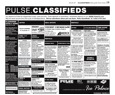
All advertising works at the right price -- so when it comes to gathering relevant BackLinks for your website, you can use bulk national classified advertising as a real boon to your company.
SECRET: The ‘AHA! Moment’ for classified advertising will come when you purchase 25+ word classified advertising in weekly shopper newspapers (from about 60 cents per paper, per week) and you negotiate listings on the local papers website with a BackLink to your website. Great value!
If you can break even or profit from the classified ads themselves, the BackLinks become free. Some systems offer over 200 newspaper website links from about $2,700 a month.
There are also free classified advertising sites such as www.USFreeAds.com or www.CraigsList.org.

10. Back Link Trades
Building back links to your web site is very important --BUT the links must be from relevant sites.
Here’s how to build back links:
Back links are important because Google and the other major search engines look at back links to your site as “votes” saying that your site is relevant for particular keywords.
The more relevant search engines judge your site to be, the higher your site ranks in the search engine results pages for those keywords.
Back Links get the job done and make it more likely for web surfers to see your site and actually pay it a visit.
You don’t want to have non-relevant links because the search engines will figure that you’re trying to get a high quantity of links to game the system. That’s called link spamming, and the search engines may penalize you for it.
Your best bet is to build relevant content that people want to link to, which is often referred to in the SEO industry as “linkbait.”

11. MicroBlogging
Micro-blogging is another type of blogging, one which consists of blogs with very short posts on sites like Twitter and Yammer with messages of 150 characters or less. When you gain followers on Twitter you gain additional external links and users keep abreast of what you’re doing.
As of 12/07, Technorati (a blog search engine) was tracking more than 112 million blogs.[1] This count is expected to triple by 12/08 with the advent of video blogging.
SECRET: Offer a link to your website in your ‘Tweets’ and use that link to expand on your initial thoughts or message and to open a two-way dialogue with users.
12. Tag Clouds:
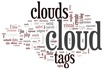
A Tag Cloud or Word Cloud (or weighted list in visual design) is a visual depiction of user-generated tags, or simply the word content of a site, used typically to describe the content of web sites.
Tags are usually single words and are typically listed alphabetically, and the importance of a tag is shown with font size or color.[1] Thus both finding a tag by alphabet and by popularity is possible.
The tags are usually hyperlinks that lead to a collection of items that are associated with a tag. A tag cloud is a set of related tags with corresponding weights. Typical tag clouds have between 30 and 150 tags.
The weights are represented using font sizes or other visual clues. Meanwhile, histograms or pie charts are most commonly used to represent approximately a dozen different weights.

13. Wikis:
Wiki technology enables collabortive documentation and knowledge sharing.
A Wiki is a page or collection of Web pages designed to enable anyone to contribute or modify content, using a simplified markup language. It’s a true ‘open source’ technology.
Wikis are used to create collaborative websites and to power community websites.
The collaborative encyclopedia Wikipedia is one of the best-known wikis and you can create Wikis on Wikipedia’s sister sites. The English-language Wikipedia has the largest user base among wikis on the World Wide Web[17] and ranks in the top 10 among all Web sites in terms of traffic.
Other large wikis include the WikiWikiWeb, Memory Alpha, Wikitravel, World66. The simplest form of ranking high in search engines is to create a listing for your market category on Wikipedia.
14. Web Directories & Site Submissions:
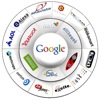
A web directory is basically a series of webpages, categorizing links to other webpages. Think of a web directory as a virtual local yellow pages.
There are many web directories on the internet, the most well known ones being provided by Google, Yahoo, and Lycos.
You can still get some mileage out of submitting your web site to directories.
The biggest directory project is the open directory project or DMOZ.
Web Directory Submission Strategy:
SECRET: We recommend using a single service to submit to over 100 search directories. One of the best examples of such is: www.submithelper.com.
Here’s a short list of sites to be sure you’re listed within:
- Yahoo Express Directory
- GoGuides Directory
- JoeAnt Directory
- Skaffe Directory
- Best of the Web
- Business.com
- SevenSeek
- Uncover the Net
Vertical and Industry Directories
These Directories are good for niche links.
For a list of these directories go to:
http://www.searchengineguide.com/searchengines.html
If you are marketing a high-dollar lead generation offer, call for your own FREE web video consultation. Until December 31, 2008, we’re offering a complimentary research for qualified client candidates in the sales industry.
Call or write Frank Pournelle, President, Last Second Media at 1-800-334-4500 or visit http://www.WebVideoLaunch.com to see Web Video Launch case studies.
